User Consata uploaded the image
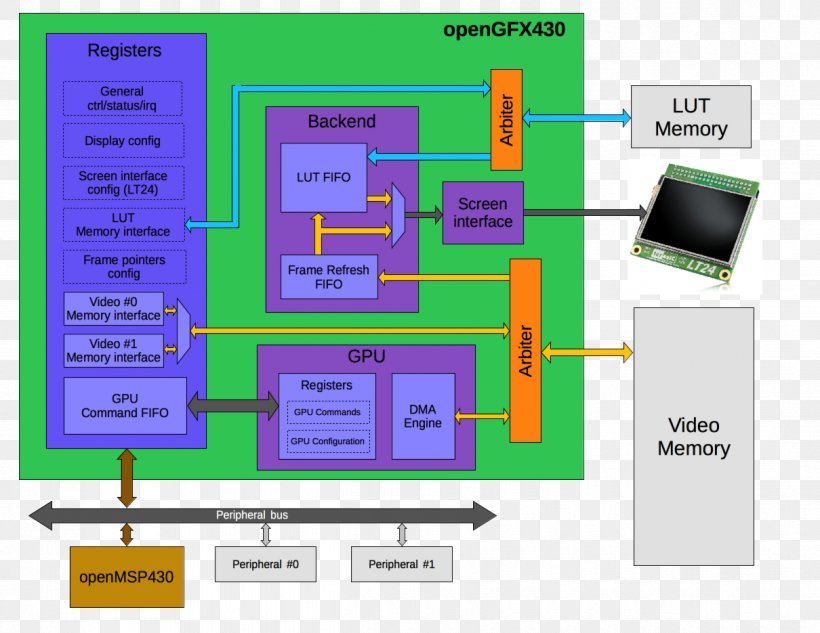
A block diagram of a computer processor, specifically an openGFX430, which is a type of video memory processor. The block diagram shows the main components of the processor, including the registers, backend, screen interface, and video memory. The registers are located in the center of the block diagram, with the backend on the left side and the screen interface on the right side. The backend is located on the top left corner of the image. The screen interface is connected to the LUT (LUT) memory, which allows the user to display the display settings of the computer. There are two main components in the diagram - the registers and the video memory - which are connected by a series of arrows. The registers are responsible for registering the computer's memory, while the screen interfaces are used to store and access the memory. The video memory is located at the bottom right corner, where the video is stored in the memory module. The processor is also connected to a DMA engine, which helps to keep the computer running smoothly and efficiently. The image also shows how the processor works, as indicated by the arrows connecting the two components.
OpenCores Verilog GitHub Computer Software Code Review PNG
. The resolution of this PNG file is 1210 x 935 pixels and it has a file size of 310.94 KB.A block diagram of a computer processor, specifically an openGFX430, which is a type of video memory processor. The block diagram shows the main components of the processor, including the registers, backend, screen interface, and video memory. The registers are located in the center of the block diagram, with the backend on the left side and the screen interface on the right side. The backend is located on the top left corner of the image. The screen interface is connected to the LUT (LUT) memory, which allows the user to display the display settings of the computer. There are two main components in the diagram - the registers and the video memory - which are connected by a series of arrows. The registers are responsible for registering the computer's memory, while the screen interfaces are used to store and access the memory. The video memory is located at the bottom right corner, where the video is stored in the memory module. The processor is also connected to a DMA engine, which helps to keep the computer running smoothly and efficiently. The image also shows how the processor works, as indicated by the arrows connecting the two components.
OpenCores Verilog GitHub Computer Software Code Review PNG
Related PNG Images