User lil1660Ashley uploaded the image
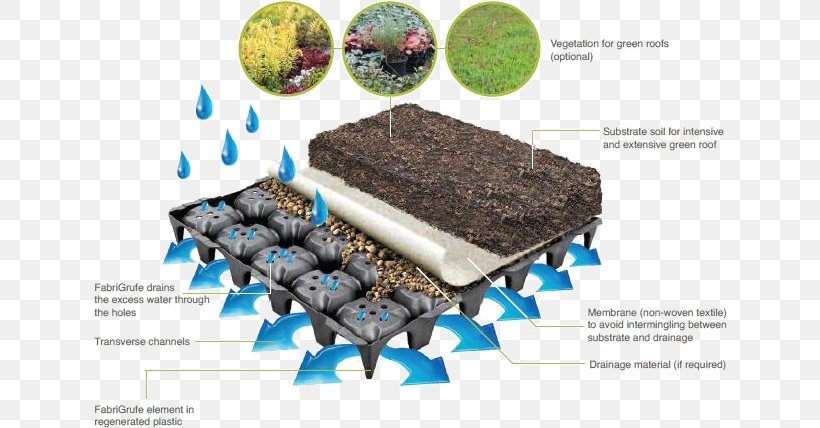
The image shows a diagram of a vegetable garden bed with different types of soil and drainage materials. The bed is made up of a black plastic tray with multiple layers of soil, which is divided into two sections. The top section is labeled "Vegetation for green roots (optional)". The bottom section is titled "Substrate soil for intensive and extensive green roof". There are three circular images on the top left corner of the image, each showing a different type of garden bed. The first image shows different types and colors of plants, including yellow, pink, and green. The second image shows the soil in the top right corner, which appears to be a mix of different shades of green and brown. The third image is a close-up of the soil, showing the different layers and textures. The image also shows a membrane (non-woven textile) that helps to prevent interlocking between substrate and drainage. The membrane is responsible for removing excess water through the holes in the soil. The image also includes a transverse channel, which helps to transfer the water from the soil to the drainage channel. The text on the image explains how to use the membrane to prevent water from entering the soil and prevent it from entering it.
Extensive Green Roofs: Carbon Sequestration Potential And Species Evaluations Drainage Garden PNG
. The resolution of this PNG file is 634 x 428 pixels and it has a file size of 696.32 KB.The image shows a diagram of a vegetable garden bed with different types of soil and drainage materials. The bed is made up of a black plastic tray with multiple layers of soil, which is divided into two sections. The top section is labeled "Vegetation for green roots (optional)". The bottom section is titled "Substrate soil for intensive and extensive green roof". There are three circular images on the top left corner of the image, each showing a different type of garden bed. The first image shows different types and colors of plants, including yellow, pink, and green. The second image shows the soil in the top right corner, which appears to be a mix of different shades of green and brown. The third image is a close-up of the soil, showing the different layers and textures. The image also shows a membrane (non-woven textile) that helps to prevent interlocking between substrate and drainage. The membrane is responsible for removing excess water through the holes in the soil. The image also includes a transverse channel, which helps to transfer the water from the soil to the drainage channel. The text on the image explains how to use the membrane to prevent water from entering the soil and prevent it from entering it.
Extensive Green Roofs: Carbon Sequestration Potential And Species Evaluations Drainage Garden PNG
Related PNG Images